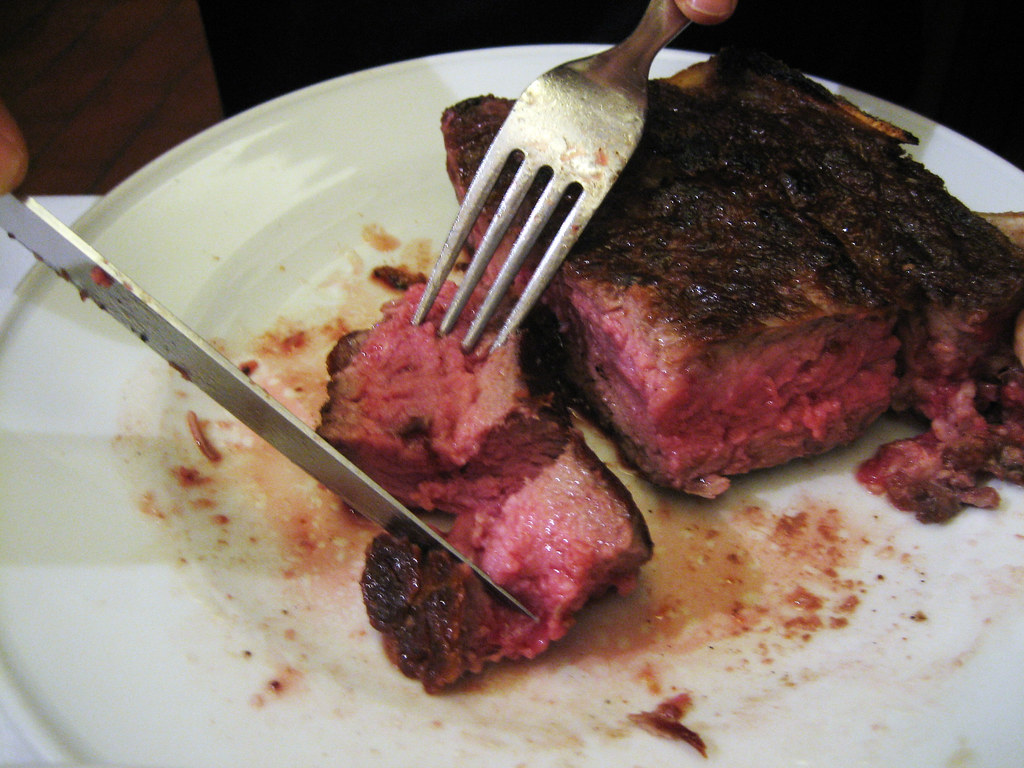
The first time one of us ordered bistecca in Florence, the waiter brought the raw steak to the table on a wooden board, like a jeweller presenting a ring. It was enormous, easily over a kilo, with the T-shaped bone running through it like a spine. "Al sangue?" he asked, which was less a question than a polite warning. Rare, of course. In Florence you don't order your bistecca medium-well. If you do, there's a fair chance the kitchen will gently refuse.
What makes it a bistecca alla fiorentina
A true bistecca alla fiorentina is a T-bone (in America we'd say a porterhouse when the tenderloin side is large) cut from the loin, with the fillet on one side of the bone and the sirloin on the other. Three things define it:
- Thickness: at least three fingers, about 5 to 6 centimetres. That's what lets the outside char while the inside stays red.
- Weight: usually 1 to 1.5 kilograms or more. It's a steak for sharing.
- Cooking: over very hot embers, never in a sauce or marinade, and served rare.
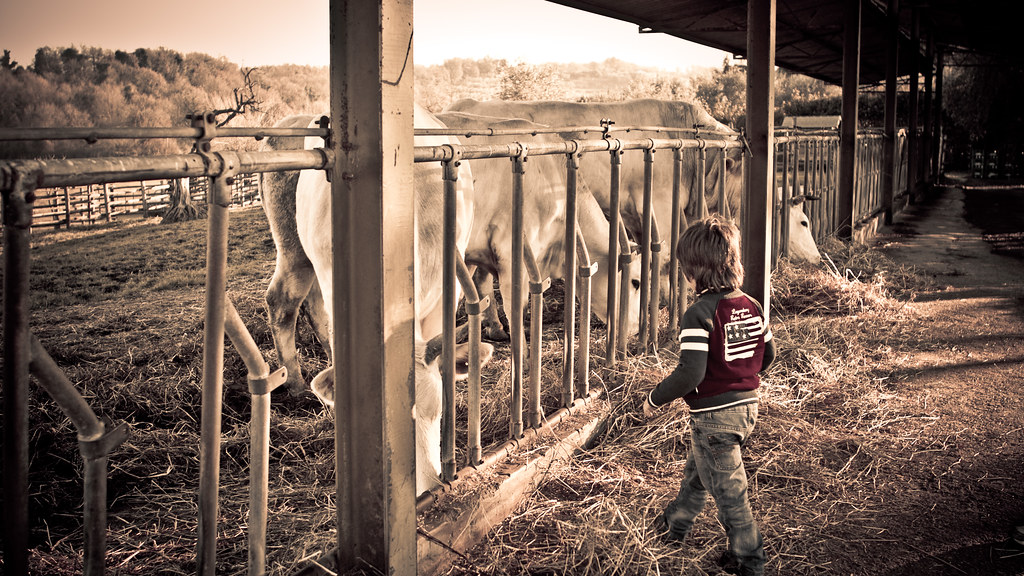
The traditional beef is Chianina, a huge, pale-coated breed from the Val di Chiana south of Florence, one of the oldest cattle breeds in Italy. Butchers in Tuscany also use other breeds and well-aged beef from elsewhere, and so do we in Brooklyn, where Chianina is almost impossible to find. A thick, dry-aged porterhouse from a good butcher gets you very close.
A steak with a story
A popular Florentine story says the word bistecca comes from English visitors shouting "beef steak!" during the feast of San Lorenzo on August 10, when the Medici family was said to hand out roasted meat to the crowds. It's a charming tale and impossible to prove. What's certain is that grilled beef has been part of Florentine feasts for centuries, and that today the bistecca is a point of civic pride.
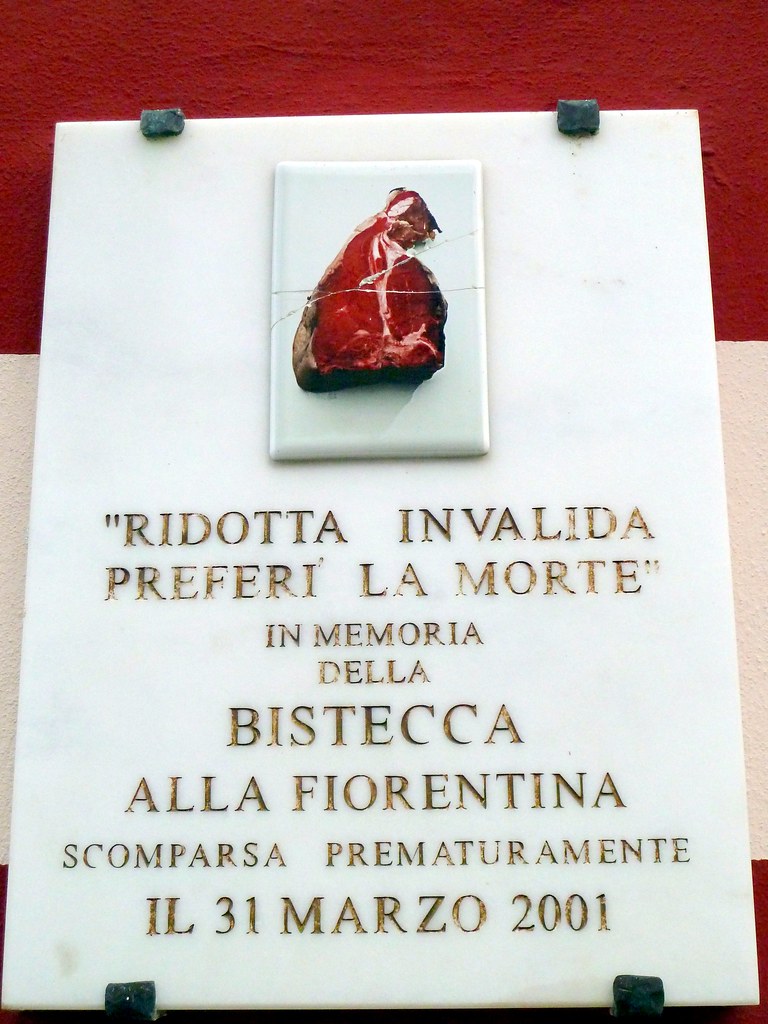
That pride showed in 2001, when European rules introduced during the mad cow crisis restricted the sale of beef on the bone from older cattle. Florentine butchers and restaurateurs held a mock "funeral" for the bistecca. When the rules were relaxed some years later, it came back to the city's tables to general celebration.
Salt it, sear it, rest it, slice it. Then stop talking and eat.
How it's made in Florence
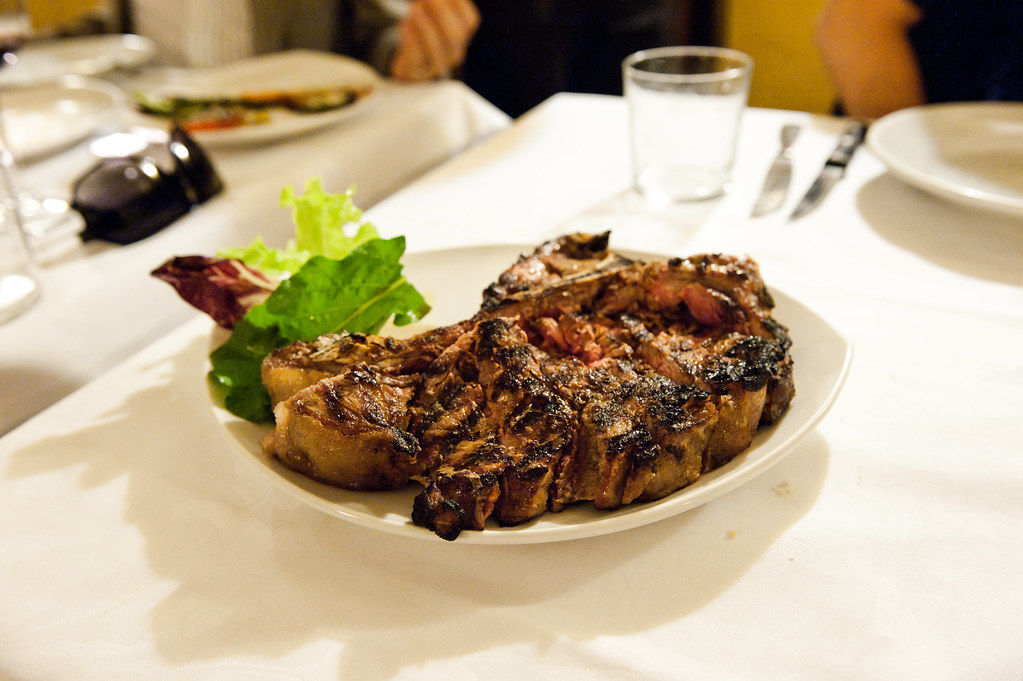
In a classic trattoria, the steak goes onto a grill over embers of oak or olive wood that have burned down to a fierce, even heat. It cooks for roughly five minutes per side without being moved, then stands upright on its bone for a few more minutes so the heat reaches the meat near the bone. It's sliced off the bone at the table, often finished with good Tuscan olive oil, coarse salt and black pepper. Seasoning before or after cooking is a debate Florentines enjoy having; plenty of cooks salt only after grilling. We salt just before it hits the fire.
The recipe
Ingredients
- 1.2 kg T-bone or porterhouse, 5–6 cm thick
- 1 tbsp coarse sea salt
- 1 tsp freshly cracked black pepper
- 3 tbsp best extra-virgin olive oil
- 1 sprig rosemary (optional, for the board)
- 1 lemon, in wedges (optional)
Tip: the servings button scales everything. For more than three people, cook two steaks rather than one giant one.
Method
- Take the steak out of the fridge at least an hour before cooking so it loses its chill. Pat it very dry with paper towels.
- Light a charcoal or hardwood fire and let it burn down to glowing embers with no flames, about 30–40 minutes. Indoors, use a heavy cast-iron grill pan heated for 10 minutes, and open a window.
- Season with salt on both sides. Lay the steak on the grill and don't touch it.
- Turn it once with tongs (never a fork) and cook the second side for another 5 minutes.
- Stand the steak upright on its bone, T-side down, for 4–6 minutes so the meat near the bone cooks through to rare. The internal temperature should be about 50–52°C (122–125°F).
- Rest for 5 minutes on a warm board. Cut the fillet and sirloin away from the bone, slice each across the grain, and reassemble the slices around the bone. Finish with pepper, olive oil and a little more salt.
Food safety note: rare beef carries some risk for pregnant people, young children, older adults and anyone with a weakened immune system. Cook to a higher temperature if in doubt. See our disclaimer.