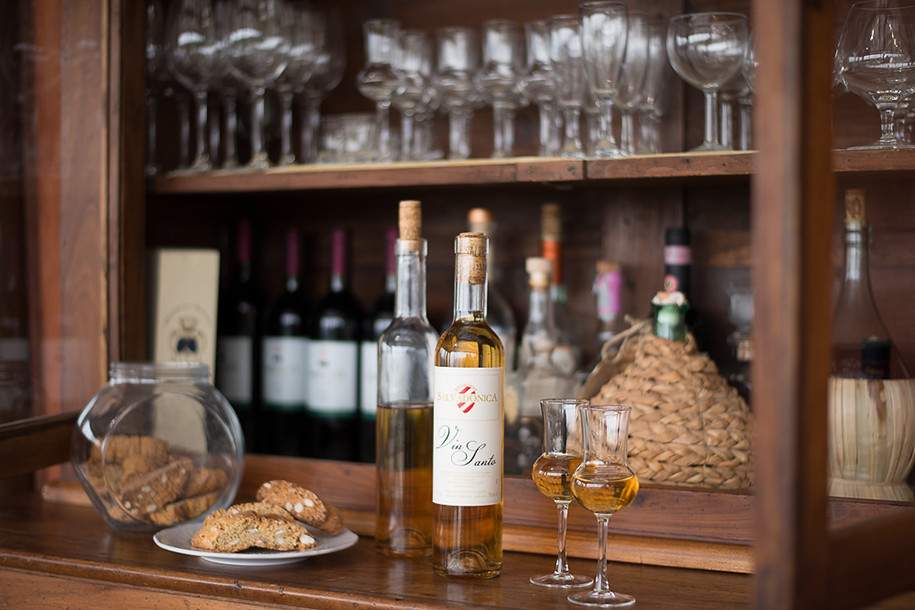
A long Tuscan lunch has a recognisable ending. The plates are cleared, someone brings a small glass of amber wine for each guest, and a bowl of hard, golden biscuits studded with almonds is set in the middle of the table. You pick up a biscuit, dip it in the wine for a few seconds, and bite. That's cantucci e vin santo, and once you've done it, ordinary dessert seems a little fussy.
The biscuits of Prato
Cantucci, also called biscotti di Prato, come from Prato, the textile city just northwest of Florence. Twice-baked biscuits are very old. The word "biscotto" itself means "cooked twice." But the modern Prato recipe is closely associated with Antonio Mattei, who opened a biscuit bakery in Prato in 1858. His shop is still there, still wrapping biscuits in its famous blue paper.
The classic recipe is wonderfully simple: flour, sugar, eggs and whole unpeeled almonds, with no butter, oil or yeast. That's why cantucci are so crunchy and keep for weeks. The dough is shaped into logs, baked, sliced diagonally while still warm, then baked again until dry and golden.
Vin Santo, the "holy wine"
Vin Santo is Tuscany's traditional dessert wine. Grapes, usually white varieties like Trebbiano and Malvasia, are dried on mats or hung from rafters for months to concentrate their sugars, then pressed and aged for years in small wooden barrels called caratelli, often in warm attics. The result is amber, nutty and complex, ranging from dry to very sweet. Nobody agrees on where the name comes from. One story links it to its use in Mass, another to a fifteenth-century visitor praising it as a "holy" wine.
Dip, count to three, bite. Any longer and the biscuit falls into the glass, which is how you learn.
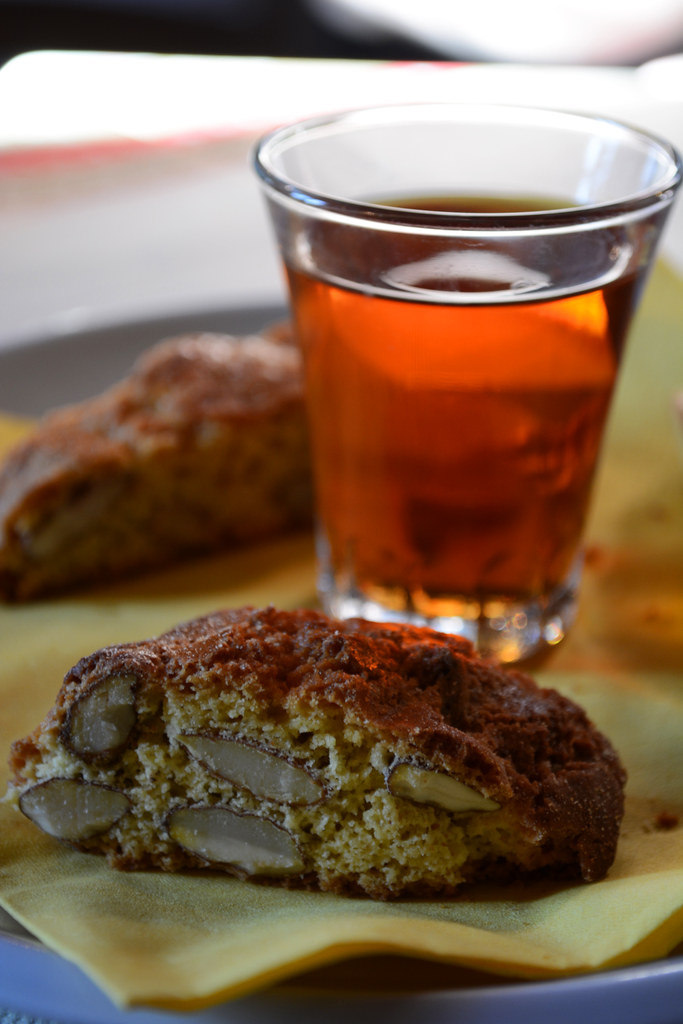
How they're made in Prato
The almonds go in whole and unpeeled, giving a lovely contrast of colour when you slice the logs. Many bakers add a little orange zest or a pinch of anise; others swear by pure almond. The key technique is slicing the logs at an angle while they're still warm and slightly soft. Wait too long and they crack. Then they go back into a cooler oven to dry out.
The recipe
Ingredients
- 250 g plain flour
- 200 g sugar
- 2 large eggs, plus 1 yolk for brushing
- 150 g whole unpeeled almonds
- 1 tsp baking powder (optional, for a slightly lighter bite)
- 1 orange, zest only (optional)
- 1 pinch salt
Method
- Heat the oven to 180°C (350°F) and line a baking tray with parchment. Lightly toast the almonds on a dry tray for 5 minutes, then cool.
- In a bowl, mix the flour, sugar, baking powder, salt and zest. Add the 2 eggs and mix to a firm, slightly sticky dough. Work in the almonds.
- With floured hands, divide the dough in two and roll each into a log about 4 cm wide and 2 cm high. Place well apart on the tray and brush with the beaten yolk.
- Bake for 25 minutes, until golden and firm to the touch.
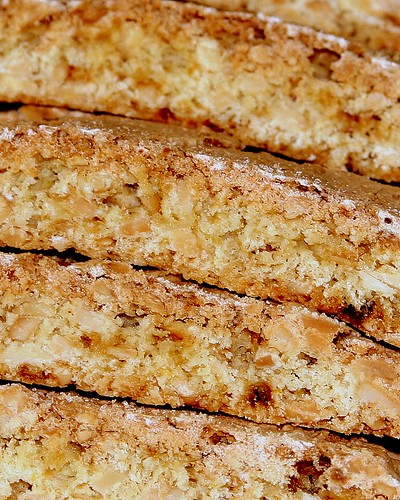
- Let the logs cool for 5 minutes, then slice diagonally into 1.5 cm biscuits with a serrated knife.
- Lower the oven to 160°C (320°F). Lay the slices flat on the tray and bake again for 10–15 minutes, turning once, until dry and lightly golden.
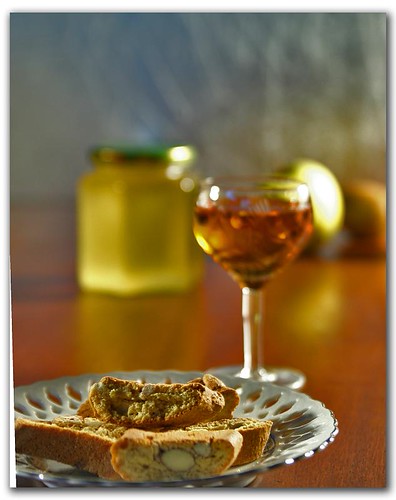
- Cool completely. Store in an airtight tin for up to a month. Serve with Vin Santo, or with coffee if it's before noon.
Allergy note: this recipe contains nuts, eggs and gluten.