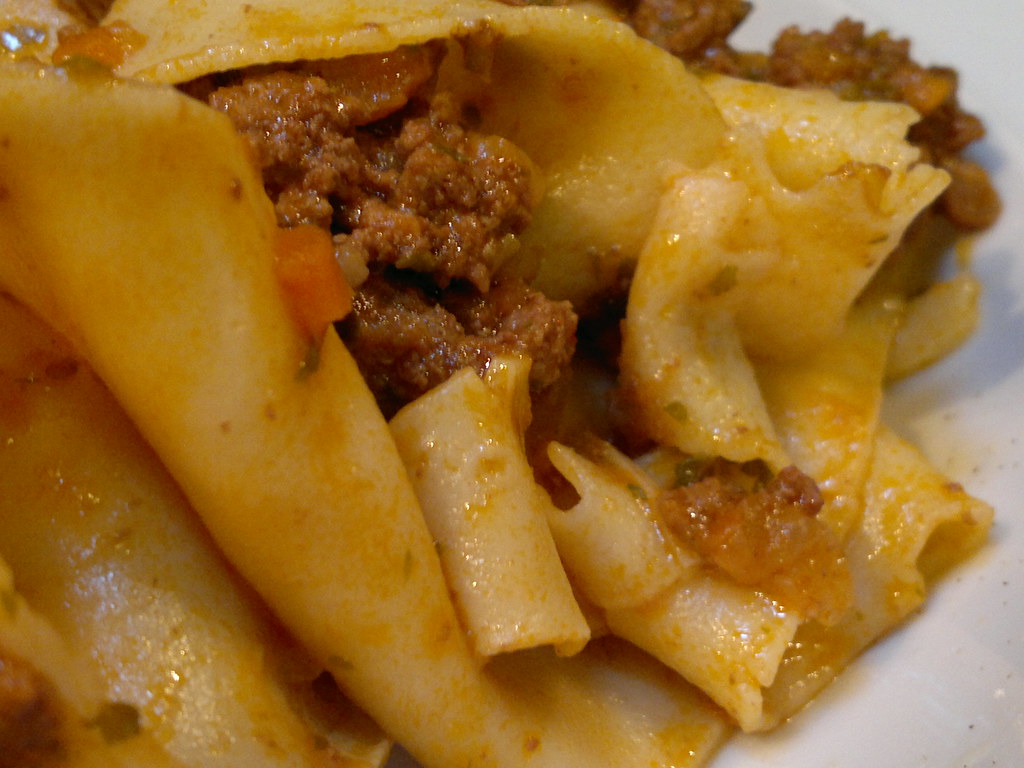
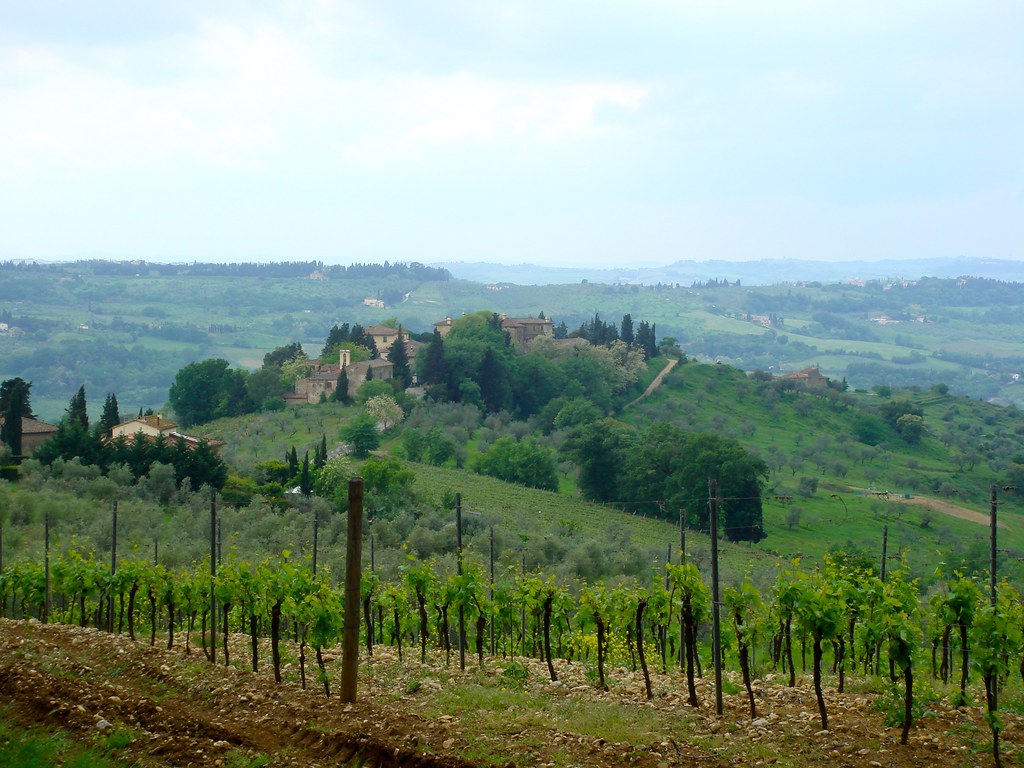
Drive through the Tuscan countryside in autumn and you'll see the signs: hunters in orange vests at dawn, hand-painted notices about the caccia, and on almost every trattoria menu, pappardelle al cinghiale. Wild boar are everywhere in Tuscany's woods, rooting up vineyards and annoying farmers, and Tuscans have a time-honoured solution: they eat them, slowly braised in red wine, over the widest pasta in Italy.
The widest ribbon
Pappardelle are broad, flat ribbons of egg pasta, usually two to three centimetres wide. The name is thought to come from the Tuscan verb pappare, to gobble up greedily, which is exactly what happens. Their width and slightly rough surface make them perfect for heavy, meaty sauces that would slide off thinner pasta.
Taming the boar
Wild boar (cinghiale) is leaner and more strongly flavoured than farmed pork. That's why most Tuscan recipes begin with a long marinade in red wine with aromatics like juniper, bay, rosemary and garlic. The marinade softens the gamey edge and starts tenderising the meat. Then comes a slow braise of two to three hours until the meat can be shredded with a fork.
In New York, wild boar is sold by some specialty butchers and online, usually frozen. If you can't find it, pork shoulder makes a very good stand-in. It's fattier and milder, so you can shorten the marinade.
The boar does the hard work in the woods. You just need a heavy pot and an afternoon.
How it's made in Tuscany
Tuscan cooks cut the boar into chunks, marinate it overnight, then drain and dry it. Some brown the meat first; others "dry" it in a hot pan to drive off liquid before adding oil. A soffritto of onion, carrot and celery follows, then the strained marinade wine, a little tomato, and hours of quiet bubbling. The ragù should be thick, dark and rich, never soupy. A little grated pecorino or parmesan on top is common, though some insist game needs no cheese at all.
The recipe
For the ragù
- 1 kg boneless wild boar (or pork shoulder), in 3 cm cubes
- 750 ml dry red wine (Chianti or Sangiovese)
- 8 juniper berries, lightly crushed
- 2 bay leaves
- 2 sprigs rosemary
- 3 garlic cloves, crushed
- 4 tbsp extra-virgin olive oil
- 1 onion, finely chopped
- 1 carrot, finely chopped
- 1 celery stalk, finely chopped
- 2 tbsp tomato paste
- 400 g canned crushed tomatoes
- Salt, pepper, and stock or water as needed
For the pasta
- 500 g "00" flour (or 600 g dried pappardelle)
- 5 large eggs
- Grated pecorino or parmesan, to serve (optional)
Method
- Put the meat in a bowl with the wine, juniper, bay, rosemary and garlic. Cover and refrigerate for 12–24 hours (6 hours is enough for pork).
- Drain, keeping the wine. Pat the meat dry. Heat half the oil in a heavy pot and brown the meat in batches over high heat. Set aside.
- Add the rest of the oil and cook the onion, carrot and celery gently for 10 minutes. Stir in the tomato paste.
- Return the meat, pour in the strained marinade wine and let it bubble for 5 minutes. Add the tomatoes, season, and cover with a lid set slightly ajar.
- Simmer very gently for 2½–3 hours, stirring now and then and adding a splash of stock if it dries out, until the meat shreds easily. Break it up with a fork.
- For fresh pasta: mound the flour, crack the eggs into a well, and mix into a dough. Knead 8–10 minutes until smooth, wrap and rest 30 minutes.
- Roll the dough thin (about 1.5 mm), dust with flour, loosely roll up and cut into 2.5 cm ribbons. Shake them out.
- Cook the pappardelle in well-salted boiling water (2–3 minutes for fresh, per packet for dried). Drain, keeping a cup of water, and toss in the ragù with a splash of pasta water until glossy.